Corporate & Events
How to Plan a Corporate Event or Off-Site
By The Hoppenville Team · 9-minute read · Last updated November 1, 2026
A corporate event is planned in eight to twelve weeks, runs four to eight hours, and turns on five decisions made early: the goal of the day, the headcount, the date, the room, and the food. At The Museum at Hoppenville a half day in the Welcome Center starts at $1,800 for four hours and a full day at $3,500 for eight, both with the A/V system, Wi-Fi and parking included, and the room holds 40 to 220 depending on the layout.
This guide is for the person who was handed the event on top of a full job.
Checklist by weeks out
Twelve to ten weeks out
- Write the goal of the day in one sentence. "Agree the sales plan for next year" plans differently from "thank the team."
- Get the budget approved in writing, with one owner. Split it into room, food and drink, travel, speakers or facilitation, and a ten percent reserve.
- Count heads honestly. Add partners and clients only if the goal needs them.
- Pick two or three dates. Tuesday through Thursday is easiest for staff and easiest to book. A fourth-quarter date needs this step done by September.
- Shortlist rooms by format: theater rows, classroom tables, banquet rounds, or an open cocktail layout. Schedule a tour of the Welcome Center and bring the headcount.
Eight weeks out
- Confirm the room and the window. Here that is a four-hour half day, an eight-hour full day, or a ten-hour weekday all-day booking.
- Book the facilitator, speaker or entertainment if there is one.
- Choose the food with the caterer. Every event here is catered by Robert Ryan Catering & Design or Tosco's Catering; coffee and pastry come with the half day, and the full day has a lunch option.
- Send the save-the-date to staff with the start and end times and whether partners are invited.
- Block hotel rooms if anyone is traveling. The nearest hotels are about 15 minutes away in Quakertown; the list is in hotels near Pennsburg.
Four weeks out
- Draft the agenda with a break every 75 to 90 minutes and a real lunch, not a working one.
- Collect dietary needs with the RSVP. Give the caterer the first count.
- Decide the bar policy: none, beer and wine, or drink tickets, and when it closes.
- Send the deck template and the slide deadline to anyone presenting.
- Order name badges, signage and any printed material.
Two weeks out
- Final agenda to all attendees, with the address, parking note and the dress code.
- Final headcount to the caterer, rounded up by ten percent.
- Test every presentation on the laptop that will run the room. The Welcome Center has a projector, a screen and a sound system; bring your own adapter.
- Confirm arrival time. Social and corporate events may arrive two hours before the start, and a sound check can be scheduled the day before.
The day before
- Print the agenda, the seating or table plan, and a one-page run-of-show for the people helping you.
- Pack a box: extension cords, adapters, markers, flip-chart paper, tape, a clicker, spare badges, the caterer's phone number.
- Charge everything. Put the decks on a second device.
The day
- Arrive two hours early. Walk the room, set the sightlines, test the microphone and the clicker.
- Put a greeter at the door for the first half hour with the badges and the Wi-Fi password.
- Start on time. Hold the schedule by cutting the discussion, not the breaks.
- Close with the next step written on one slide, then open the bar or the lawn.
Who pays and etiquette
The company pays, from a budget one person owns and the leadership team approved before the room was booked. Staff never pay for a work event, and that includes the bar; a cash bar at a company off-site reads as a company that could not afford its own party. If clients or partners are invited, the host pays for them as well.
Invitations are a calendar hold first, then a proper notice with the agenda. Say plainly whether the day is mandatory, whether it is on work time, and whether partners are welcome. Partners belong at a celebration dinner, not at a planning day. Give the dress code in words ("business casual", "jeans are fine, we are outside part of the day") rather than a label people have to guess at.
Alcohol at a work event is a policy, not a mood. Decide it in advance, put it in the run-of-show, and keep it modest: beer and wine, or two drink tickets, and the bar closes an hour before the end. The bar here is run by a licensed and insured bartender or the caterer, which also means someone other than a colleague decides when a guest has had enough. Arrange rides home for anyone who needs one and say so in the invitation.
The questions people argue about on planning forums, settled:
- How far ahead to book. Eight to twelve weeks for a weekday meeting. Fourth-quarter dates in rooms within an hour of Philadelphia are gone by September, so a November or December event is booked in the summer.
- Whether food and drink are included. Almost never in the room rate, here or anywhere. Read the package: the room and the A/V are the rental; the per-head food is the caterer's quote. Compare venues on the whole day.
- Entertainment. A facilitator earns their fee at a planning day; a band does not. For a celebration, one thing to do beyond eat and drink (a tour, a game, a demonstration) does more than a DJ. Here the four museum collections can be opened for your group by arrangement.
- Buyouts and meeting packages. A hotel sells you a package; a venue sells you the room and lets you choose the rest. The second is cheaper for a group under 100 and more work for the planner.
- Natural light. Ask for it. People who have sat in a windowless ballroom ask for it loudly. The Welcome Center has a patio along the full length of the room that opens onto the gardens.
What it costs
The Welcome Center at The Museum at Hoppenville is published at three windows for corporate use. The Half-Day Corporate package is four hours from $1,800 and includes the A/V system, coffee and pastry service, parking and Wi-Fi. The Full-Day Corporate package is eight hours from $3,500 with the A/V system, a lunch catering option, breakout space, Wi-Fi and parking. The Weekday All-Day package is ten hours, Monday to Thursday, from $3,200, with setup access from 8am, the A/V system and vendor unloading, which is the one for a trade show or a vendor fair. All three are on the event packages page, and every rate the venue charges is published, so you can build the budget before you call.
Each package covers the rental window only. Food, bar and add-ons are quoted separately by the caterer, so the published figure is the floor of the budget, not the total. What moves the rest:
- Food and drink per person. Coffee and pastry for 60 costs a fraction of a plated lunch for 60. A full-day off-site usually needs breakfast, lunch and an afternoon break.
- Headcount. Food scales with it; the room does not. Forty people and one hundred and sixty pay the same rental in the same window here.
- Hours. Four, eight or ten. A longer day is quoted separately.
- Day of the week. Weekdays are the natural corporate dates and the easiest to book. If you need a Saturday, May through October and December are peak months on the rate card.
- Production. Hired facilitation, a speaker, a staging company, printed material, and a photographer. The room's own projector, screen and sound system cover a standard meeting with nothing added.
How long it runs and a timeline
Four hours for a meeting or a training block. Eight hours for an off-site with lunch. More than a day and a half and the group stops listening, so a two-day retreat is two short days with a dinner between them.
A full-day off-site for 60 in the Welcome Center:
| Time | What happens |
|---|---|
| 7:00 | Planner arrives. Room set in classroom tables, A/V tested, badges on a table at the door. |
| 8:30 | Arrival. Coffee and pastry on the patio side. |
| 9:00 | Open. Leader states the goal of the day in two minutes. Session one. |
| 10:30 | Break, 15 minutes. People walk out to the patio. |
| 10:45 | Session two, small groups at the tables. |
| 12:15 | Lunch, 45 minutes, seated. No slides. |
| 1:00 | Session three. The hardest topic goes here, while people are fed and awake. |
| 2:30 | Break, 15 minutes. Optional walk to the museum buildings by arrangement. |
| 2:45 | Session four, decisions and owners. |
| 4:00 | Close. One slide of next steps. Bar or lawn for an hour. |
| 5:00 | Guests leave. Room cleared by 5:00 for an eight-hour booking that began at 9:00. |
For a half day, keep the shape and drop sessions three and four. For an evening client reception, see the holiday party guide; the same five-hour evening window applies.
Why leave the conference room
Attention: a room nobody can slip back to their desk from. No interruptions: the day is the agenda, not the gaps in it. And the drive back is the debrief, which is where the decisions get made. The formats that most often come here are a kickoff, a training day, an offsite, a client dinner and an awards night, each with its own run of the day above.
What to wear
Say it on the invitation, because staff will ask and clients will guess. For a planning day or a training, "business casual" means collared shirts, no ties, closed shoes. If part of the day is on the grounds or the patio, say "comfortable shoes, part of the day is outside" and people will thank you. For a client dinner or an awards evening, "cocktail attire" or "jacket, no tie" sets the level without a lecture. The Bank Barn is not climate-controlled, so a spring or fall event there gets a line about layers.
Where to hold it within an hour of Pennsburg
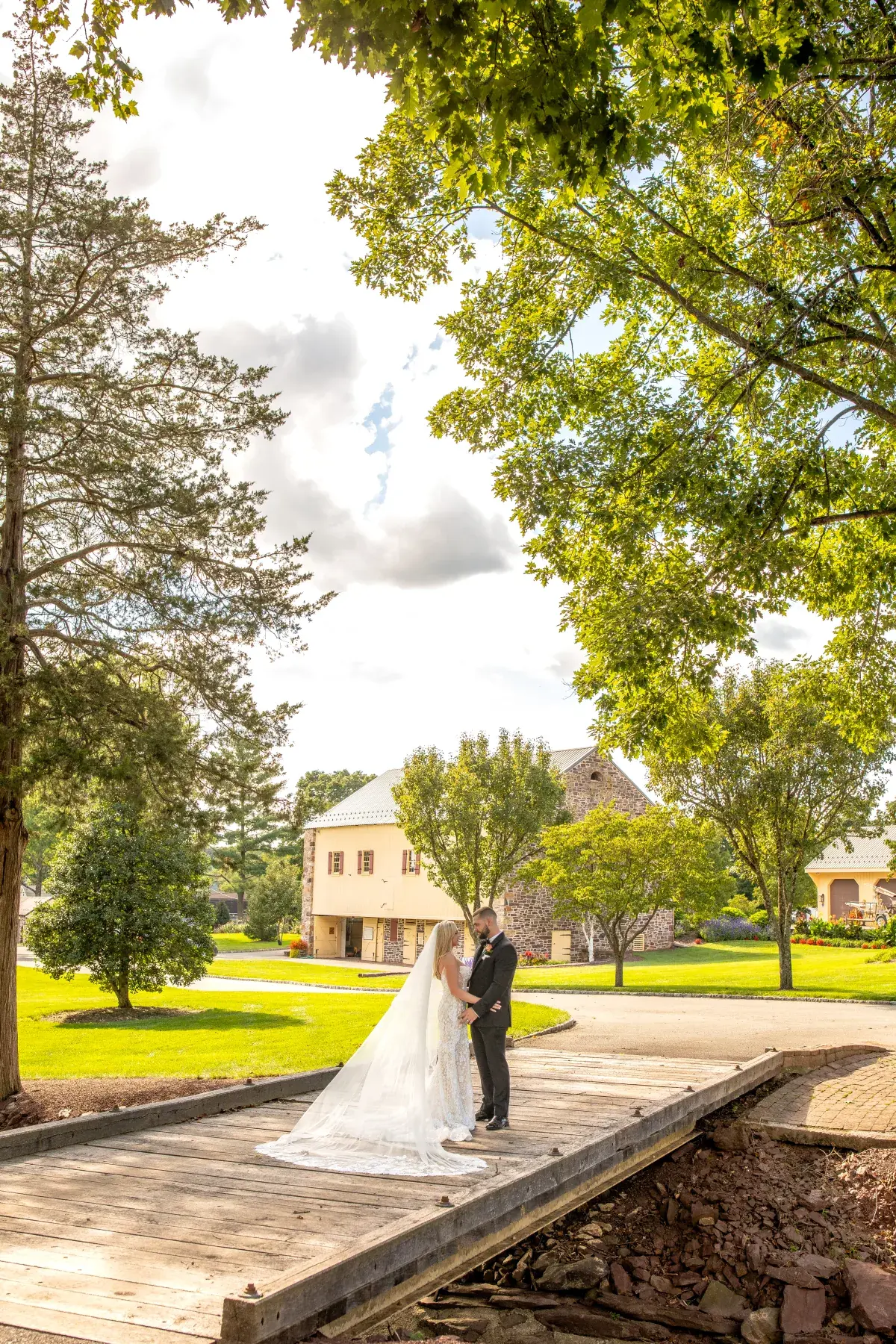
The Museum at Hoppenville, Pennsburg. The Welcome Center is the corporate room: 5,400 square feet, 20-foot ceilings, a stone fireplace, a projector and screen, a sound system and 1 Gbps Wi-Fi, parking for about 100 cars, fully accessible, and a patio the length of the room that opens onto the gardens. It holds up to 220, and the layout sets the real number: theater rows for an all-hands, classroom tables for a training, banquet rounds for a dinner. The Bank Barn seats about 150 under hand-hewn timber and is the room for a harvest dinner or a team evening in spring through fall; it is not climate-controlled. The Cottage sleeps six and works as a leadership retreat base for a small group overnight. We are about 45 minutes from Center City Philadelphia, 30 from Allentown and 20 from Quakertown. The corporate events page has the room photos. For a group under 20, the estate is more room than you need and a conference room will feel fuller.
A hotel meeting room in the Lehigh Valley. The right answer when most attendees fly in and sleep on site. You pay a package per person and the room is a ballroom; ask about natural light and whether the A/V is a separate line.
A restaurant private room. For a client dinner of 12 to 40, food and room on one bill against a minimum spend. Inns with private dining rooms such as the Joseph Ambler Inn in North Wales or the Blue Bell Inn are the kind to ask. Limited space for a presentation.
A county park pavilion. Green Lane Park is a few minutes from Pennsburg and Nockamixon State Park is near Quakertown. A pavilion is right for a summer team picnic with no slides; permits go through the park office, and there is no indoor fallback.
When you are ready to see the room, schedule a tour with the date and the format in hand. If the event is a fundraiser or a gala, the fundraiser and gala planning guide covers the ticketing and the sponsorship side.
The download
The Corporate Event Planning Checklist is this guide on one printed page: the twelve-week list in a column, the budget lines with a blank beside each, and a half-page agenda grid with the breaks already marked. It is free, it prints on letter paper, and it is the page to put in front of whoever approved the budget.
Frequently asked questions
How far in advance should you book a corporate event venue?
Eight to twelve weeks for a meeting or a training day; four to six months for a fourth-quarter date. Rooms within an hour of Philadelphia fill for October through December by September, so a holiday-season event is booked in the summer.
How much does a corporate event venue cost?
Here, from $1,800 for a four-hour half day and from $3,500 for an eight-hour full day in the Welcome Center. Both cover the room, the A/V system, Wi-Fi and parking. Food and drink are quoted per person by the caterer and are usually the larger line.
What is included in a corporate event package?
The room for the window, the projector and screen, the sound system, 1 Gbps Wi-Fi and parking for about 100 cars. The half day adds coffee and pastry service; the full day adds a lunch catering option and breakout space. Everything else is quoted separately, so the published figure is a floor, not a total.
How long should a corporate event be?
Four hours for a meeting or a training block, eight for an off-site with lunch, and a day and a half at most before attention runs out. Build a break every 75 to 90 minutes and give people somewhere to walk; the patio and the grounds are why groups choose a rural room over a hotel.
Who pays for a corporate event?
The company, from a budget one person owns. Staff are never asked to pay for a work event, including the bar. If partners or clients are invited, the host company pays for them too; a shared-cost event is a conference, not a corporate event.
Can we have alcohol at a work event?
Yes, with a plan. Bar service here comes from a licensed and insured bartender or the caterer, never self-serve. Most companies set a drink ticket limit or a beer-and-wine bar, close it an hour before the end, and arrange rides for anyone who needs one.
How many people fit in the Welcome Center for a meeting?
Up to 220, and the layout sets the real number. Theater rows hold the most, classroom seating with tables holds fewer, and banquet rounds for a dinner land in between. Tell us the format and the headcount and we will say which layout fits.
See where your day could happen.
Come walk the 24-acre estate in Pennsburg. Private tours run Tuesday through Saturday by appointment.
